

Why Mission Accelerator Live Is Built as an Experience, Not a Conference
A conference can give an entrepreneur useful information while leaving the conditions of their working life untouched. They return to the same interruptions, the same unresolved decisions and the same habits that made change difficult before they arrived. The quality of the speakers may be excellent; the distance between hearing an idea and using it remains substantial.
Mission Accelerator Live is designed around a different use of time. Q Branch's current programme is a five-night, all-inclusive entrepreneur accelerator in the Peak District, with 15 places per cohort. The published offer combines strategy, identity-level work, physical challenge and connection, with accommodation, meals, activities, training and community included. The next advertised cohorts are May and October 2027.
Those choices describe a format, not a guarantee of what any individual will achieve. Their purpose is to create a setting in which participants can work on decisions and patterns of behaviour with more continuity than a sequence of unrelated presentations normally allows.
The environment is part of the work
An entrepreneur's attention is often divided between immediate operational demands and longer-term choices. Stepping away from the normal workplace can create space to examine those choices, but changing location alone achieves little. The experience must give that space a purpose.
A residential format allows ideas and conversations to develop across several days. A discussion can be revisited after reflection, and a participant can compare what they intended with how they responded to a different situation. Shared meals and informal time can also support relationships that would be difficult to build during a tightly packed networking break.
This is an argument for continuity, rather than for filling every hour. An experience that demands constant participation can leave too little room to make sense of what has happened. The design challenge is to connect activity, discussion and reflection so that each helps participants use the next.
Challenge needs a clear purpose
Physical challenge and identity-level work should not be treated as theatrical additions to business content. Their value depends on how the experience is framed, supported and connected to the participant's own decisions. An impressive activity without a meaningful connection can become another story to tell rather than something useful to apply.
Prospective participants should ask practical questions about the format, expectations and suitability. A small cohort offers a different kind of participation from a large audience, and an intensive residential programme requires a genuine commitment of time. Choosing the right setting is part of taking development seriously.
The same discipline applies after any development experience. A participant needs to decide what will change in their work, which commitments are realistic and how they will notice whether they are following through. Feeling motivated at departure is useful, but it is an incomplete measure of value.
For Q Branch, the connection is consistent with FUSION: Brand Strategy, People Development and Operational Excellence need to support one another. The experience should help a leader examine the relationship between direction, behaviour and practical delivery, rather than treating those as separate subjects.
If you are considering an intensive setting for that work, explore Mission Accelerator Live and discuss whether the format fits. The decision should begin with what you want to work on and the kind of participation you are ready to give.
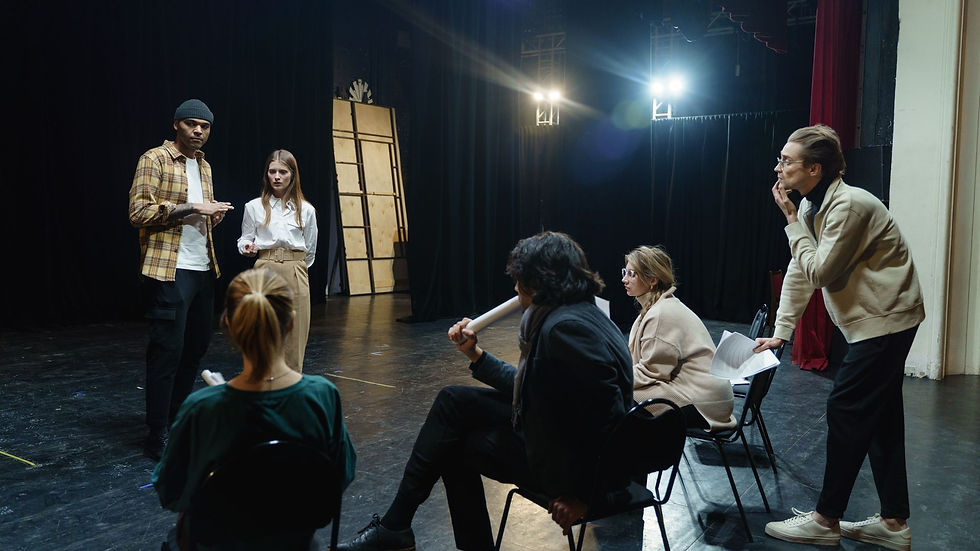
Featured photograph: licensed illustrative stock photography from Pexels; it is not a photograph of a Mission Accelerator Live cohort.



Comments